About
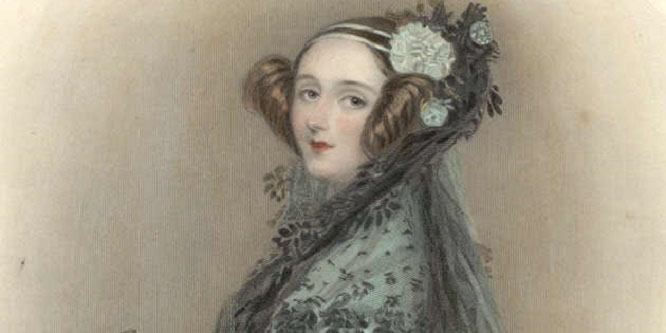
Ada Lovelace, born Augusta Ada Byron on December 10, 1815, in London, England, was a visionary mathematician and writer renowned for her work on Charles Babbage's proposed Analytical Engine. Often hailed as the world's first computer programmer, Lovelace's notes on the Engine included an algorithm intended to be processed by a machine, marking a significant leap in the understanding of computation. Her insights extended beyond mere calculation; she foresaw the potential of computers to manipulate symbols and perform complex tasks beyond simple arithmetic. Her contributions have had a profound and lasting impact on the field of mechanical engineering and computer science, inspiring generations of innovators and thinkers.
Before Fame
Ada Lovelace's early life was shaped by the tumultuous relationship between her parents, the poet Lord Byron and Anne Isabella Milbanke. Her mother, determined to counter what she saw as Byron's dangerous influence, emphasized science and mathematics in Ada's education. This focus nurtured Ada's innate curiosity and analytical abilities, fostering a deep interest in these subjects from a young age. She displayed a remarkable aptitude for logic and problem-solving, setting the stage for her future intellectual pursuits.
Career Highlights
Lovelace's most significant contribution came through her translation and annotation of an article by Italian military engineer Luigi Menabrea on Babbage's Analytical Engine. Her notes, which were three times the length of the original article, contained detailed explanations of how the machine could be programmed to perform specific tasks. Notably, she described an algorithm for calculating Bernoulli numbers, now recognized as the first algorithm intended to be processed by a machine. This pioneering work established her legacy as a foundational figure in the history of computer programming. Lovelace's vision extended beyond the mechanical capabilities of the Engine; she speculated on its potential to create complex music and graphics, demonstrating an understanding of the broader applications of computation that was far ahead of her time.
Trivia
- She often translated Italian mathematicians' works.
- She was written as a character in Spyfall, Part 2, the second episode of Doctor Who, series 12.
Family Life
Ada Lovelace married William King, later the 1st Earl of Lovelace, in 1835. Together, they had three children: Byron, Anne Isabella (later Lady Anne Blunt), and Ralph Gordon. Her social circle included prominent scientists and intellectuals of the time, including Charles Babbage, whom she considered a mentor and friend. Despite her intellectual achievements, Lovelace's life was marked by health challenges and financial difficulties. She died at the young age of 36 on November 27, 1852.