About
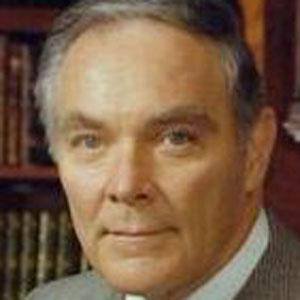
Alexander Haig was a prominent American political figure and military general who served as a key advisor to Presidents Richard Nixon and Ronald Reagan, wielding significant influence on international relations. A complex and often controversial figure, Haig also harbored presidential aspirations. He notably served as the 59th United States Secretary of State from 1981 to 1982, a period marked by Cold War tensions and evolving geopolitical landscapes.
Before Fame
Before ascending to the highest echelons of American power, Haig dedicated himself to education and military service. He earned a Master of Business Administration degree from Columbia Business School in 1955, followed by a Master of Arts degree in international relations from Georgetown University in 1961. These academic pursuits laid the groundwork for his future role in shaping foreign policy. His commitment to the United States was evident through his participation in both the Korean War and the Vietnam War, where he distinguished himself with acts of bravery and earned numerous accolades. These included the Distinguished Service Cross, the Silver Star with oak leaf cluster, and the Purple Heart.
Career Highlights
Haig's career was punctuated by moments of high drama and strategic importance. His tenure as White House Chief of Staff during the tumultuous Watergate scandal placed him at the center of a political crisis. He navigated complex situations, striving to maintain stability within the executive branch. His time as Secretary of State was characterized by a firm stance against Soviet expansionism and active engagement in global affairs. While his tenure was relatively short, his impact on American foreign policy was substantial.
Trivia
- His ambition and assertive personality earned him the nickname "CinC (Commander in Chief) World" early in his career.
- His close relationship with Richard Nixon facilitated his rapid ascent through the military ranks, going from colonel to four-star general without experiencing direct combat.
Family Life
Alexander Haig was married to Patricia Fox, and together they had three children. While his public life was often marked by political maneuvering and international negotiations, his family provided a grounding influence.