About
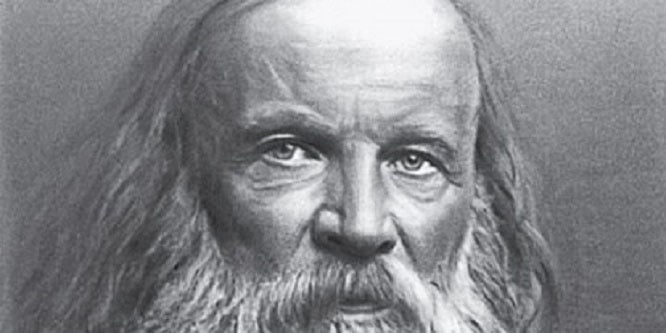
Dmitri Mendeleev was a Russian scientist who revolutionized the field of chemistry. Born in Tobolsk, Siberia, he is best known for developing the Periodic Table of Elements. His groundbreaking chart not only organized the known elements but also predicted the existence and properties of elements that were yet to be discovered. These predictions proved remarkably accurate, solidifying the Periodic Table as a cornerstone of modern chemistry.
Before Fame
Mendeleev's intellectual journey began with the study of natural science at the prestigious St. Petersburg University in Russia. This early exposure to the scientific method and the natural world laid the foundation for his later achievements in chemistry. His formal education provided him with the necessary tools and knowledge to tackle the complexities of the elements and their relationships.
Career Highlights
Mendeleev's most significant contribution was undoubtedly the creation of the Periodic Table. This system, based on the atomic weights and chemical properties of elements, revealed recurring patterns and allowed him to predict the existence of undiscovered elements like gallium, germanium, and scandium. Beyond the Periodic Table, Mendeleev also made valuable contributions to other areas, including investigating the composition of petroleum and helping to establish the first oil refinery in Russia. His work extended beyond pure research to practical applications, demonstrating his commitment to using science for the benefit of society.
Trivia
- He was the youngest of 14 children.
- He helped found the first oil refinery in Russia.
- His Periodic Table predicted elements before they were discovered.
Family Life
Dmitri Mendeleev experienced both personal joy and sorrow throughout his life. He was married twice, first to Feozva Nikitichna Leshcheva, and later to Anna Ivanova Popova. His marriage to Anna lasted from 1882 until his death in 1907. His personal life, while less publicly discussed than his scientific achievements, undoubtedly influenced his perspective and shaped his dedication to his work.