About
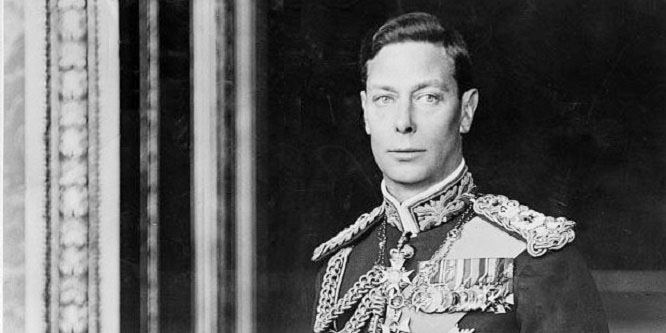
George VI, born Albert Frederick Arthur George, reigned as King of the United Kingdom and the Dominions of the British Commonwealth from 1936 until his death in 1952. His reign was defined by a period of immense global upheaval, including World War II and the subsequent reshaping of the British Empire. He ascended to the throne unexpectedly following the abdication of his brother, Edward VIII, thrusting him into a role he never anticipated. Despite his initial reluctance and a debilitating stammer, George VI proved to be a steadfast and unifying monarch during a time of national crisis. He became a symbol of British resilience and determination during the war years, remaining in London throughout the Blitz and sharing in the hardships of his people.
Before Fame
Before assuming the throne, Albert (as he was known) received a traditional education for a member of the royal family. He underwent training at the Royal Naval College, Dartmouth, followed by a brief period of study at Trinity College, Cambridge. He served in the Royal Navy during World War I, demonstrating his commitment to his country. His early life was largely overshadowed by his older brother, Edward, who was the heir apparent. Albert's stammer, which caused him considerable anxiety, was addressed through speech therapy.
Career Highlights
George VI's reign was marked by several significant events. He led the United Kingdom through World War II, providing crucial moral support to the nation. He oversaw the dissolution of the British Empire into the Commonwealth of Nations, a transition that redefined Britain's role in the world. During his reign, the United States and the Soviet Union emerged as the world's dominant superpowers, signaling a shift in global power dynamics. His close relationship with Prime Minister Winston Churchill was instrumental in guiding Britain through the war. The king's unwavering commitment to his duties earned him the respect and affection of his people.
Trivia
- He was the last Emperor of India.
- His stammer was famously portrayed in the film 'The King's Speech'.
- He took the throne after his brother, Edward VIII, abdicated.
- World War II began and ended during his reign.
- He oversaw the transition of the British Empire to the Commonwealth of Nations.
Family Life
George VI married Lady Elizabeth Bowes-Lyon, later known as the Queen Mother, in 1923. Their marriage was a love match, and they became a popular and devoted royal couple. They had two daughters: Elizabeth, who succeeded him as Queen Elizabeth II, and Margaret. His family life provided him with strength and support throughout his reign. He was deeply devoted to his wife and daughters, and their close-knit family provided a sense of stability during a turbulent era.