About
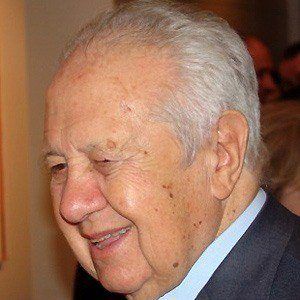
Mário Soares was a prominent Portuguese politician who significantly shaped the nation's transition to democracy. He served as the 17th President of Portugal from 1986 to 1996, a period marked by Portugal's entry into the European Economic Community (now the European Union) and increased international engagement. His presidency was characterized by a commitment to social justice and European integration. Beyond his presidential role, Soares also held the position of Prime Minister on two separate occasions, from 1976 to 1978 and again from 1983 to 1985. These terms were crucial in stabilizing the country after the Carnation Revolution and establishing a functioning democratic government.
Before Fame
Soares's political activism began early in his life. While studying at the University of Lisbon, he joined the Portuguese Communist Party, indicating his early engagement with leftist political ideologies. This involvement marked the beginning of a lifelong commitment to political change and social justice, which would later define his career.
Career Highlights
Soares's career is highlighted by his pivotal role in Portugal's transition to democracy after the authoritarian regime of António de Oliveira Salazar. As Prime Minister, he implemented key economic and social reforms. His presidency was defined by Portugal's entry into the European Economic Community, solidifying the nation's place in Europe. He is widely regarded as the "Father of Portuguese Democracy" for his tireless efforts in establishing and consolidating democratic institutions.
Trivia
- Soares ran for President again in 2006 at the age of 81, demonstrating his continued passion for public service, although he received only 14% of the vote.
Family Life
Mário Soares was married to Maria Barroso, a prominent actress and politician in her own right. Together, they had two children. His family life was deeply intertwined with his political career, and Maria Barroso was a constant source of support and inspiration throughout his life.