About
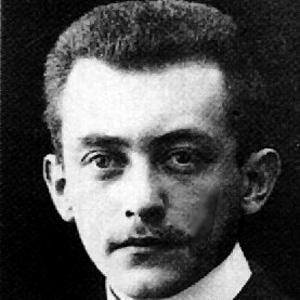
Max Born was a highly influential German physicist and mathematician, renowned for his pivotal role in the development of quantum mechanics. His profound contributions extended to solid-state physics and optics, solidifying his place as a towering figure in 20th-century science. Born's work provided a crucial statistical interpretation of the wave function, a cornerstone of quantum theory, which revolutionized our understanding of the behavior of matter at the atomic and subatomic levels. His insights laid the groundwork for numerous technological advancements and continue to shape modern physics research.
Before Fame
Early in his academic career, Born's intellectual prowess was recognized when he was appointed scribe for his professor, the eminent mathematician David Hilbert. Hilbert became a mentor to Born, guiding his research and fostering his intellectual development. This early mentorship played a crucial role in shaping Born's approach to problem-solving and his dedication to rigorous mathematical analysis in physics.
Career Highlights
Born's most significant contribution was his statistical interpretation of the wave function in quantum mechanics, published in 1926. This interpretation provided a probabilistic understanding of the location of particles, resolving a major challenge in the field. In 1954, his groundbreaking work was recognized with the Nobel Prize in Physics, which he shared with Walther Bothe. Throughout his career, Born held professorships at prestigious universities, including the University of Göttingen, where he mentored numerous students who went on to make significant contributions to physics.
Trivia
- He shared the Nobel Prize in Physics with Walther Bothe in 1954.
- His statistical interpretation of the wave function is a cornerstone of quantum mechanics.
- He also made significant contributions to solid-state physics and optics.
Family Life
Max Born married Martha E. Hedwig on August 2, 1913. Together, they had three children, further enriching Born's life beyond his scientific pursuits. His family provided a stable and supportive environment that allowed him to focus on his groundbreaking research.