About
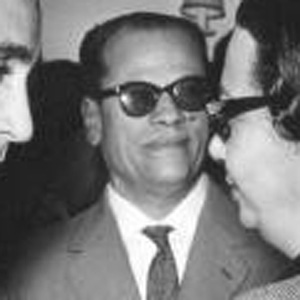
Naguib Mahfouz, born on December 11, 1911, was a highly acclaimed Egyptian novelist and writer. He is celebrated as one of the first contemporary writers of Arabic literature to achieve international recognition. Best known for his seminal work, The Cairo Trilogy, Mahfouz's novels and short stories offer profound insights into Egyptian society, culture, and politics. His literary contributions earned him the prestigious Nobel Prize in Literature in 1988, solidifying his place as a literary giant.
Before Fame
Mahfouz's intellectual journey began at the University of Cairo, where he pursued a degree in philosophy, graduating in 1934. His early literary endeavors were deeply rooted in the vibrant landscapes and complex social dynamics of Cairo. These formative experiences significantly shaped his writing style and thematic concerns, laying the groundwork for his later masterpieces.
Career Highlights
Naguib Mahfouz's career spanned over seven decades, during which he produced an extensive body of work. His most celebrated achievement is undoubtedly The Cairo Trilogy, a sweeping epic that chronicles the lives of three generations of a Cairo family. Other notable works include The Honeymoon, The Harafish, and Arabian Nights and Days. Mahfouz's writing is characterized by its realism, psychological depth, and nuanced exploration of social issues. He received the Nobel Prize in Literature in 1988, a landmark achievement that brought Arabic literature to the forefront of the global literary scene.
Trivia
- Mahfouz authored over 350 short stories.
- He wrote approximately 30 novels.
- He was 94 years old when he passed away.
- He received the Nobel Prize in Literature two years before Octavio Paz.
Family Life
Naguib Mahfouz was a devoted family man. He married Atiya Mahfouz in his early forties and together they had two daughters, Fatima and Umm Kalthum. His family life remained relatively private, allowing him to focus on his writing and intellectual pursuits.