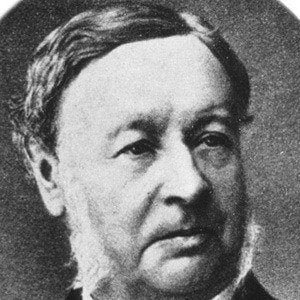
About
Theodor Schwann was a highly influential 19th-century physiologist whose groundbreaking work significantly advanced the understanding of cell theory. He is celebrated for his contributions to identifying the fundamental role of cells as the basic structural and functional unit of living organisms. Schwann's research extended beyond cell theory to encompass various aspects of physiology, solidifying his legacy as a pioneer in the field.
Before Fame
Before embarking on his illustrious scientific career, Theodor Schwann pursued higher education at several prestigious German universities. He began his studies at the Humboldt University of Berlin in 1834, followed by attendance at the University of Bonn and the University of Würzburg. These formative years laid the groundwork for his future scientific endeavors, providing him with a solid foundation in the biological sciences.
Career Highlights
Schwann's career was marked by a series of landmark discoveries. He is most famously known for his role in developing cell theory, which revolutionized our understanding of life. In addition to this, he identified cells in the peripheral nervous system, now known as Schwann cells, that are crucial for nerve impulse transmission. Furthermore, he discovered pepsin, an enzyme essential for protein digestion in the stomach, and made significant contributions to the understanding of organic yeast and its role in fermentation. These discoveries cemented his place as a leading figure in the history of physiology.
Trivia
- Schwann cells, named in his honor, are vital for the myelination of nerve fibers in the peripheral nervous system.
- He attended multiple universities: Humboldt University of Berlin, University of Bonn, and University of Würzburg.
- Albert Einstein, another famous scientist, was also born in Germany.
Family Life
Theodor Schwann's father was a goldsmith and a printer, indicating a background in skilled craftsmanship and communication. While details about his personal life remain relatively scarce, his family background likely influenced his early development and intellectual curiosity.