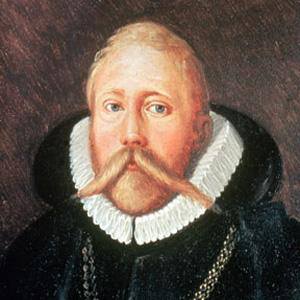
About
Tycho Brahe, born Tyge Ottesen Brahe, was a pivotal figure in the history of astronomy. He is widely regarded as one of the most important astronomers of the sixteenth century and the last of the major naked-eye astronomers, meaning he conducted his groundbreaking observations without the aid of a telescope. His meticulous and comprehensive astronomical and planetary observations were unparalleled in their accuracy and served as the crucial data source for Johannes Kepler's laws of planetary motion. Brahe's dedication to precise measurement and his development of innovative astronomical instruments significantly advanced the field of astronomy, bridging the gap between the medieval Ptolemaic model and the emerging heliocentric view of the universe.
Before Fame
Brahe's early life was marked by a shift in his intended career path. Initially, his uncle steered him towards the study of law at the University of Copenhagen. However, Brahe's passion for astronomy quickly overshadowed his legal studies. He secretly pursued his astronomical interests, immersing himself in books and observations, which ultimately set the stage for his future achievements.
Career Highlights
Brahe's career reached its zenith when he was appointed as the official imperial astronomer by the Holy Roman Emperor Rudolph II in 1597. This prestigious position provided him with resources and support to continue his research at the Benátky Castle Observatory and later in Prague. His most significant contribution was the vast collection of precise astronomical data he meticulously gathered over decades. This data proved invaluable to Johannes Kepler, who used it to formulate his laws of planetary motion, fundamentally changing our understanding of the solar system. Brahe also designed and built new astronomical instruments, improving the accuracy of astronomical observations.
Trivia
- Before Brahe's discoveries, people commonly believed that stars were comets located within the Earth's atmosphere.
- Brahe is famous for losing part of his nose in a duel and wearing a prosthetic made of silver or gold (accounts vary).
- He established the Uraniborg observatory on the island of Hven, a center for astronomical research.
Family Life
Tycho Brahe married Kristen Barbara Jorgensdatter. Together, they had eight children. His family life, while perhaps less documented than his scientific pursuits, undoubtedly played a role in shaping his life and legacy.