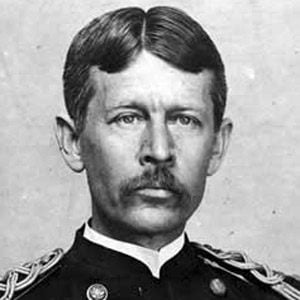
About
Walter Reed was an American physician who served in the U.S. Army and made a groundbreaking discovery: yellow fever is transmitted by mosquitoes. His research revolutionized the understanding and control of this deadly disease, paving the way for significant advancements in public health and infrastructure projects.
Before Fame
Reed demonstrated exceptional academic abilities from a young age. He obtained his medical degree from the University of Virginia at the remarkably young age of eighteen. This early achievement signaled his dedication to the field of medicine and foreshadowed his future contributions.
Career Highlights
Reed's most significant contribution was his leadership of the U.S. Army Yellow Fever Board in Cuba. This team conducted experiments that definitively proved that yellow fever was transmitted by mosquitoes. This discovery was crucial not only for protecting soldiers and civilians from the disease but also for enabling the completion of the Panama Canal. Control measures implemented based on Reed's research dramatically reduced yellow fever cases and made the construction project feasible. His work had a profound impact on global health and engineering.
Trivia
- His medical team's yellow fever discovery allowed for the control of the disease.
- The discovery paved the way for the completion of construction on the Panama Canal.
- He received his medical degree from the University of Virginia when he was eighteen years old.
Family Life
Walter Reed married Emily Lawrence in 1876. Together, they had two biological children. They also adopted a Native American daughter, demonstrating their commitment to family and compassion.