About
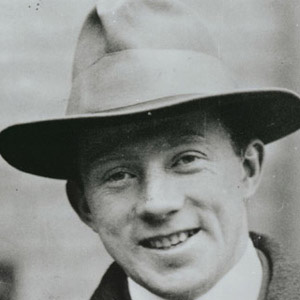
Werner Heisenberg was a highly influential German theoretical physicist and one of the primary architects of quantum mechanics. His groundbreaking work revolutionized our understanding of the atomic and subatomic world, challenging classical physics and paving the way for new technologies. He is best known for formulating the uncertainty principle, a cornerstone of quantum theory that states that the position and momentum of a particle cannot both be known with perfect accuracy. This principle has profound implications for the nature of reality and the limits of human knowledge. Heisenberg's contributions earned him the Nobel Prize in Physics in 1932.
Before Fame
Even as a student, Heisenberg demonstrated exceptional intellectual abilities. A pivotal moment in his early career was his attendance at the Bohr Festival in 1922, where he had the opportunity to meet and interact with Niels Bohr, a leading figure in atomic physics. This encounter proved to be deeply influential, shaping Heisenberg's future research direction and solidifying his interest in the emerging field of quantum mechanics. The mentorship and intellectual stimulation he received from Bohr played a crucial role in his development as a physicist.
Career Highlights
Heisenberg's career was marked by a series of groundbreaking contributions to theoretical physics. He developed matrix mechanics, one of the first formulations of quantum mechanics. His uncertainty principle, published in 1927, remains one of his most significant and widely recognized achievements. Heisenberg also made important contributions to the theory of nuclear physics and the understanding of cosmic rays. His work laid the foundation for many subsequent advancements in physics and related fields.
Trivia
- Heisenberg's uncertainty principle has had a profound impact on philosophy and our understanding of the limits of knowledge.
- He was awarded the Nobel Prize in Physics in 1932 for the creation of quantum mechanics.
- He faced controversy during and after World War II due to his involvement in the German nuclear program.
Family Life
Werner Heisenberg married Elisabeth Schumacher in 1937. Together, they had twins the following year, marking the beginning of their family. While Heisenberg's professional life was filled with scientific breakthroughs and intellectual pursuits, his personal life centered around his family and home.