About
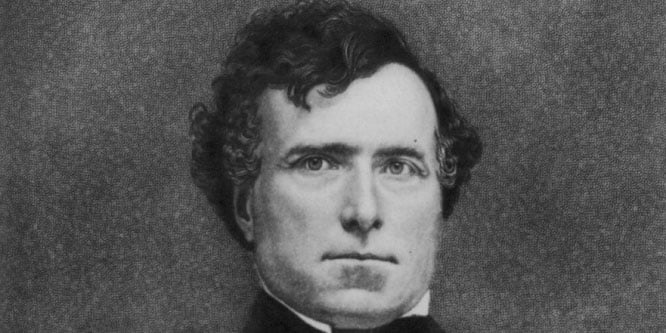
Franklin Pierce, the 14th President of the United States, served from 1853 to 1857. His presidency is widely regarded as a failure, primarily due to his stance on slavery and his enforcement of the Fugitive Slave Act. This earned him the label of "doughface," a Northerner sympathetic to the South, and significantly damaged his reputation. His actions further polarized the nation and contributed to the growing tensions that ultimately led to the Civil War. He is often ranked among the worst presidents in American history.
Before Fame
Before entering politics and ascending to the presidency, Franklin Pierce established a successful private law practice in his home state of New Hampshire. His legal acumen and reputation led to numerous professional opportunities, many of which he reportedly declined, suggesting a degree of selectivity or perhaps a lack of ambition beyond his immediate sphere. This period laid the groundwork for his later political career, providing him with valuable experience and connections.
Career Highlights
Pierce's career pinnacle was his single term as President of the United States. However, this period is largely remembered for its failures. His administration's support for the Kansas-Nebraska Act, which allowed for popular sovereignty in determining the status of slavery in those territories, inflamed sectional tensions. His strict enforcement of the Fugitive Slave Act further alienated Northerners and solidified his image as a pro-Southern president. While he aimed to maintain national unity, his policies had the opposite effect, pushing the country closer to division and war. Post-presidency, his open support for the Confederacy cemented his negative legacy.
Trivia
- He was well-liked personally, despite his unpopularity as president.
- His later support for the Confederacy effectively ended any chance of rehabilitating his reputation.
- He was friends with prominent literary figures Henry Wadsworth Longfellow and Nathaniel Hawthorne.
Family Life
Franklin Pierce married Jane Means Appleton. Their family life was marked by tragedy, as they had three sons, none of whom survived to adulthood or witnessed their father's presidency. This personal sorrow deeply affected both Franklin and Jane Pierce, adding another layer of complexity to their public lives.